
Last updated November 21, 2026
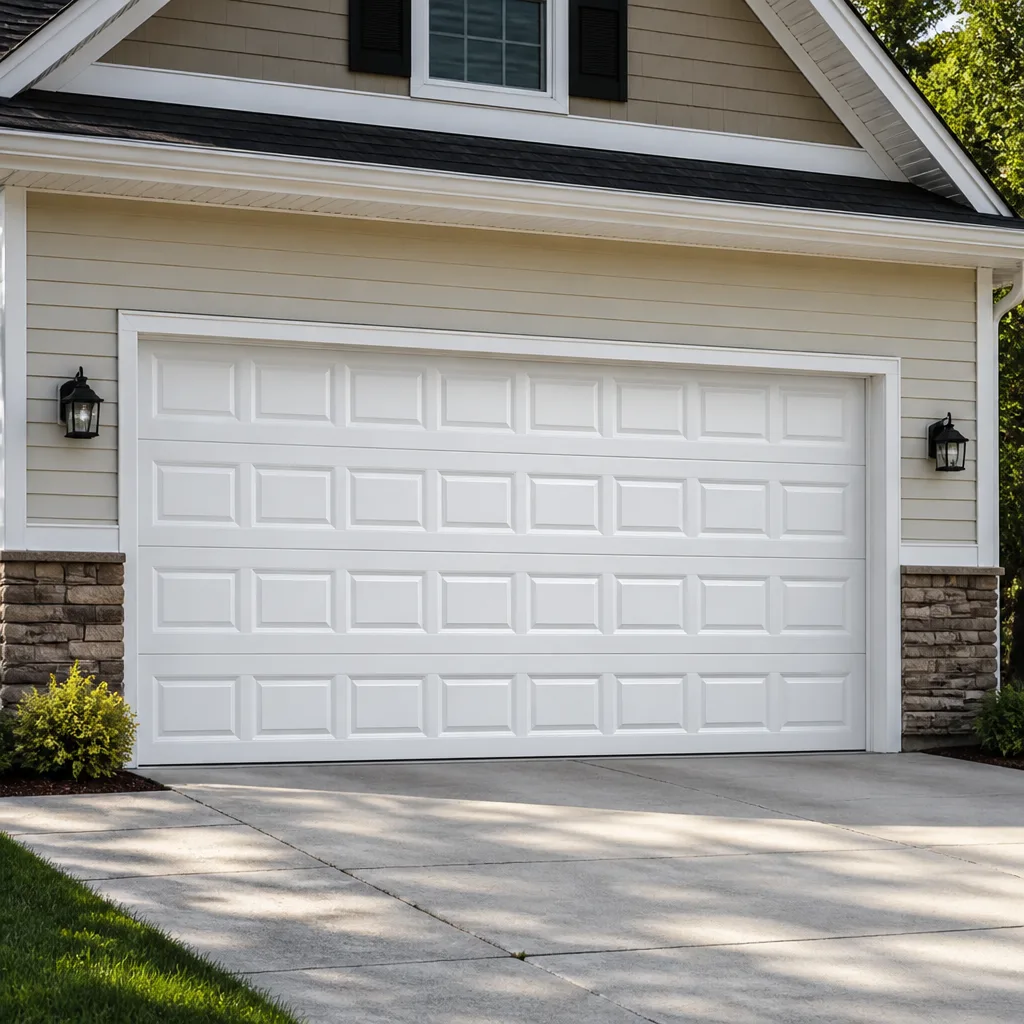 Raised-panel steel
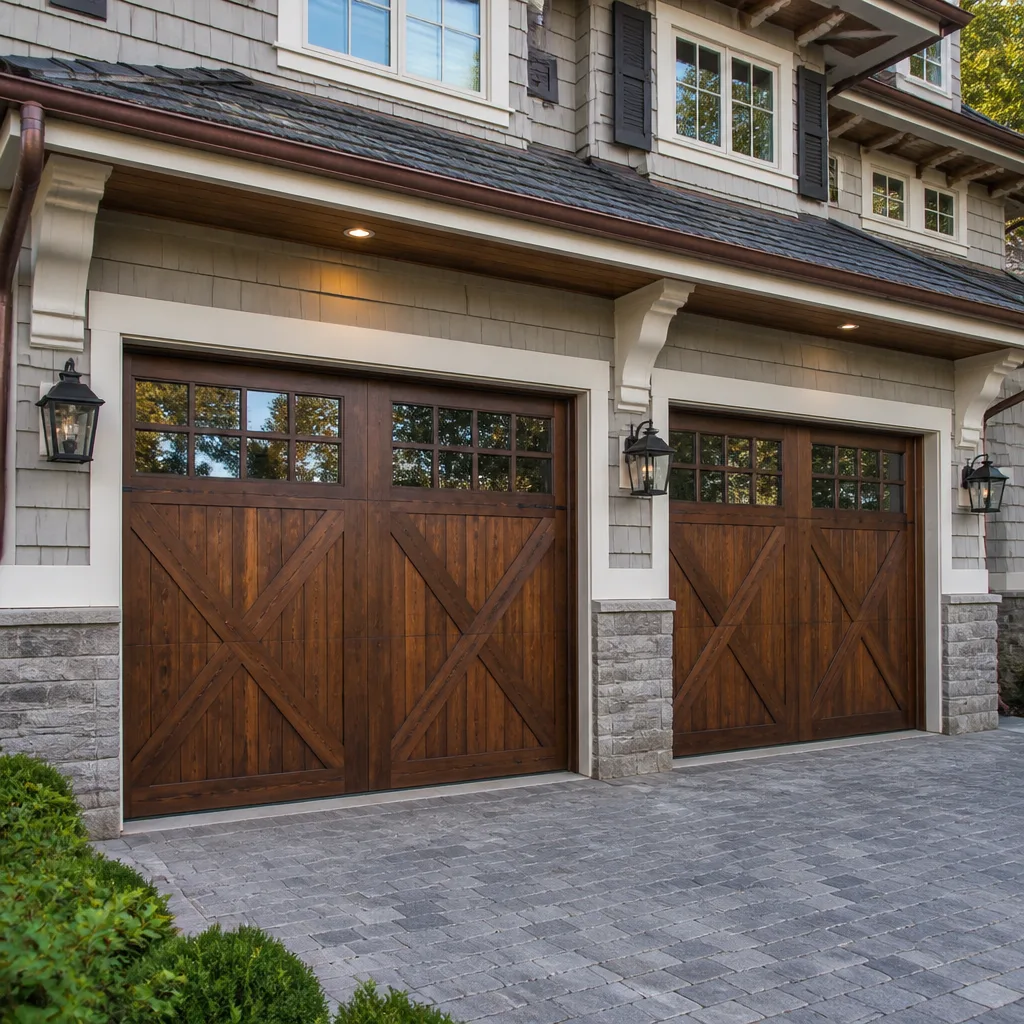 Carriage house
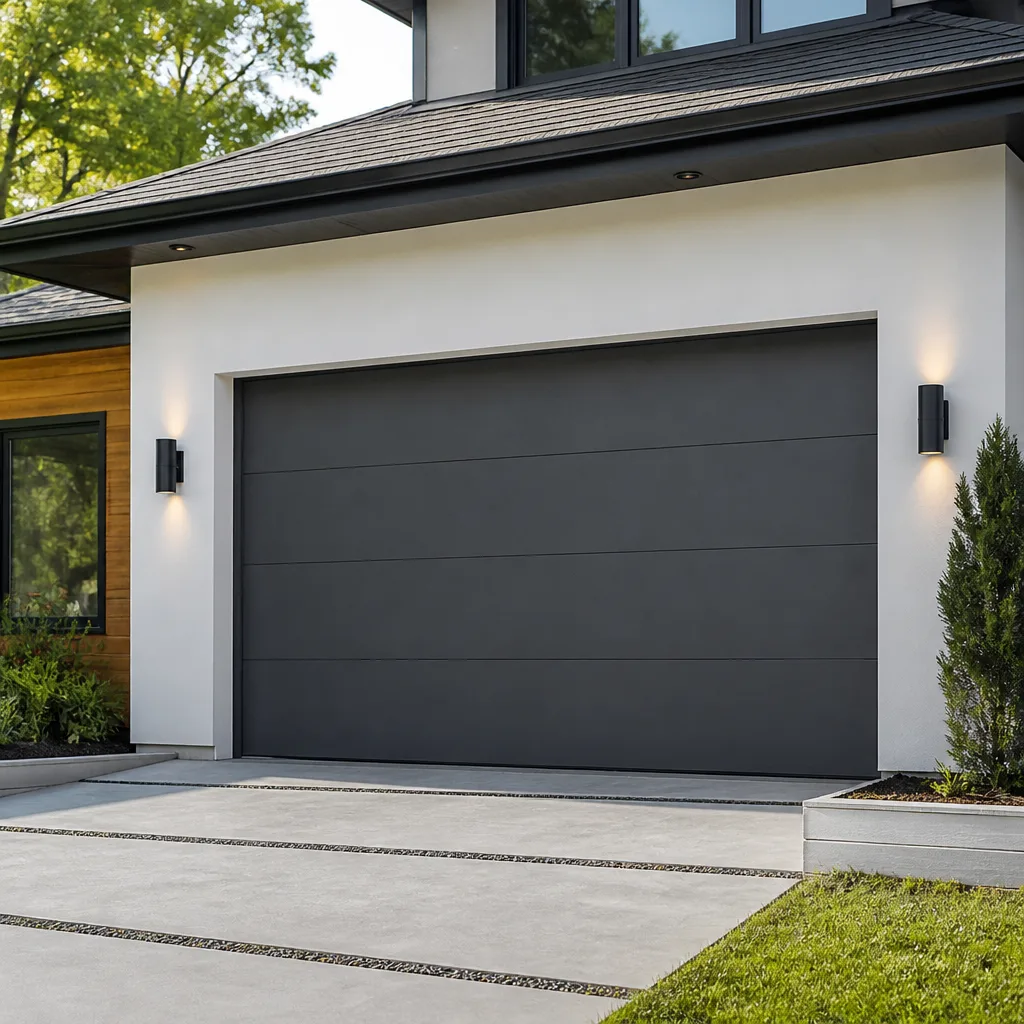 Modern flush
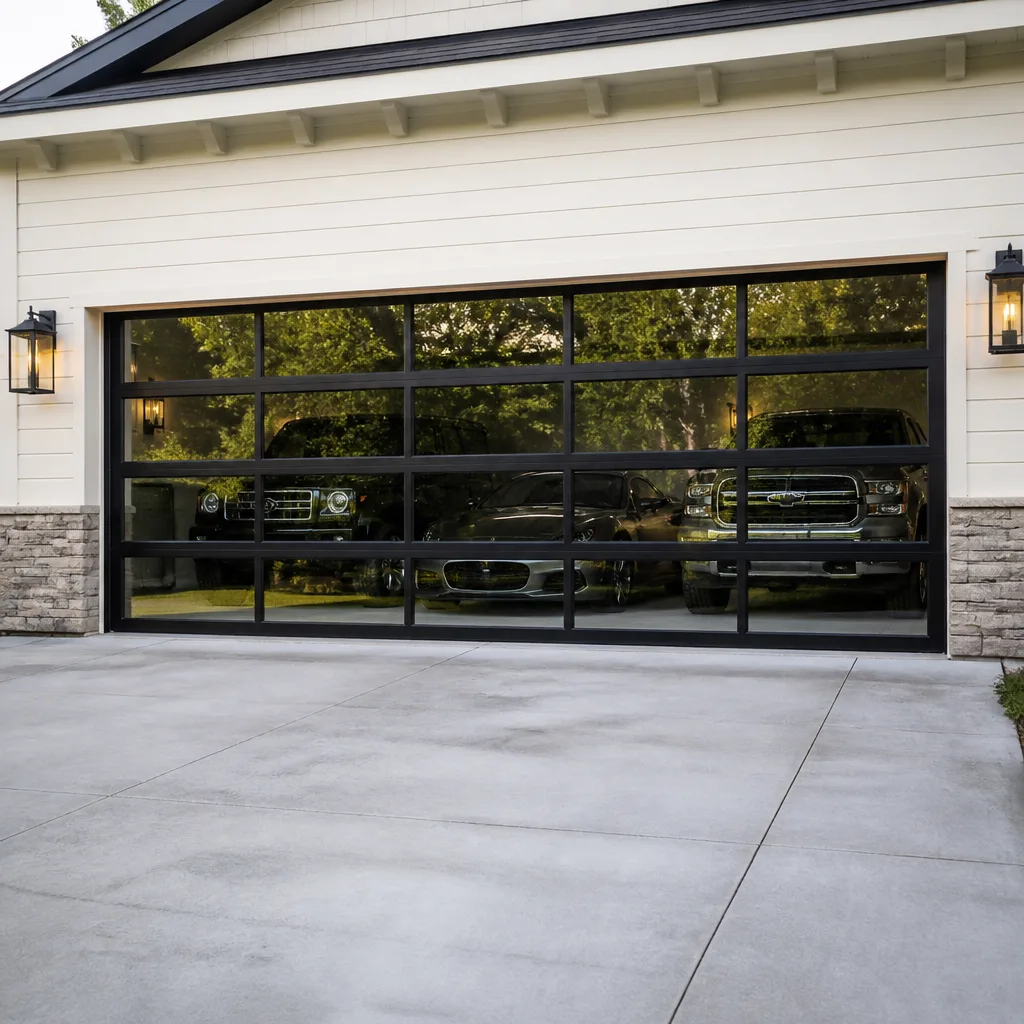 Full-view glass
 LiftMaster openers
 Chamberlain openers
Full 25-point door and opener safety check with every visit - springs, cables, rollers, tracks, and your LiftMaster or Chamberlain opener included
You get a price before we start. It does not change when the pro arrives.
Get your free estimateGarage Door Warning Signs: A Highlands Homeowner’s Reference Guide
A grinding noise from the top of your garage door and a grinding noise from the track are two completely different problems with two completely different urgency levels. Most guides flatten both into “call a pro immediately,” which is either an overreaction or an underreaction depending on which one you actually have. A door that shrieks once in a cold snap and then runs quiet for a month is not the same animal as a door that bangs on every cycle.
In Highlands, where winter temperatures swing hard and fast, that distinction matters even more, because cold changes how a healthy door behaves. This guide sorts the symptoms by where they come from and how fast they need attention, so you can tell the difference between a door that needs a look this month and a door you shouldn’t touch.
Quick Answer
The most serious warning signs are a door that reverses before it touches the floor, a snapped torsion spring, a visibly frayed or kinked cable, and a door that hangs crooked or slams down hard. These mean stop using the door and have it looked at before the next cycle. Grinding at the top plate, squealing rollers, and a slower travel speed are usually less urgent but still worth scheduling. If you’re unsure which category your door falls into, the sound’s location and timing will tell you more than the volume will.
Styles & brands we work with
- Raised-panel steel
- Carriage house
- Modern flush
- Full-view glass
- LiftMaster openers
- Chamberlain openers
Table of Contents
- Sound-Based Diagnosis: What the Noise Is Telling You
- Visual Warning Signs: What to Look For and Where
- Behavioral Signs: Speed, Balance, and Reversal Problems
- Cold-Weather Door Behavior in Highlands vs. Real Mechanical Failure
- Urgency Triage: Fix This Week, Fix This Month, or Stop Now
- What You Should Never Adjust Yourself
- Why Brand Fluency Affects Diagnosis Speed
Sound-Based Diagnosis: What the Noise Is Telling You
The location of a noise narrows the fault faster than the noise itself. A garage door is a fairly simple machine with a handful of moving parts, and each of them fails with its own signature. Before you call anyone, note where the sound is coming from: the top of the door near the header, the side tracks, the opener unit hanging from the ceiling, or the floor.
Here’s a working table to sort noise by component and severity. Severity is ranked on our three-tier scale, which we’ll walk through in full later in this guide.
Noise Diagnosis Table
- Grinding from the header (top of the door): likely the torsion spring, the bearing plate, or the center bracket. Severity: stop and inspect. A failing torsion spring can snap without much warning, and a snapped spring drops the full weight of the door onto whatever is under it. Do not operate the door until it’s looked at.
- Grinding from the tracks (sides): usually worn rollers or a roller that has left the track. Severity: monitor closely, schedule this week. A door off its track can bind and put a strain on the opener, but it’s rarely a same-hour emergency unless the door is stuck open or closed.
- Popping or a loud bang from the header: torsion spring failure in progress or a bearing that has seized. Severity: stop using the door. A single loud pop followed by a door that won’t lift is the classic snapped-spring signature.
- Squealing or screeching: dry rollers, a dry hinge, or a worn bearing. Severity: fix this month. This is usually lubrication or part wear, not an imminent failure.
- Rattling from the opener: loose hardware, worn opener sprocket, or a chain that needs tensioning. Severity: monitor, schedule when convenient. Rarely dangerous, often fixable the same visit.
- Banging or slamming when the door comes down: a safety reverse setting out of adjustment, a broken spring, or a cable off its drum. Severity: stop using the door. A door that slams is either out of balance or has lost tension, and both put people and property at risk.
- A rhythmic click from the wall console or opener: opener logic board or travel limits out of adjustment. Severity: fix this week. The door isn’t at risk, but the opener is failing, and the door may jam mid-cycle.
In our experience working on doors across Highlands, the noise most homeowners describe as “grinding” is actually two different things: a dry bearing above the door and a roller that has started to flat-spot. Listening with the door on manual (disconnected from the opener) isolates the door hardware from the opener and makes the source much easier to pin down. Our technicians have up to 9 years of experience with that isolation step, and it’s usually what turns a vague complaint into a one-trip repair.
If the noise points to spring or opener work, that’s a job for a specialist. We handle garage door spring repair as a standard service, which few general handymen do because of the tension involved, and garage door opener repair for both current and older units.
Visual Warning Signs: What to Look For and Where
Visual inspection catches what the ear misses, but only if you know where to look and what “bad” actually looks like. Every spring, cable, and roller on a residential door shows a progression, and the earlier in that progression you catch it, the cheaper the fix. Here’s how to read each group.
Springs
Torsion springs sit above the door on a steel shaft, and extension springs run along the sides of the track on doors built for that style. On a torsion spring, a clean break is obvious: a visible gap in the coil. On an extension spring, look for a stretched coil that no longer closes its windings evenly, a spring with an opening at one end, or a spring that has lost tension so the door feels heavy when you lift it by hand (with the door disconnected from the opener). A spring that’s sagging, has a two-inch gap in the winding, or looks shiny on the inside of the coil is on its way out. Springs are the part of this system that most deserves a professional eye. They’re under enough tension to injure, and a coil that has already taken a partial hit can fail under the pressure of a DIY adjustment. If your spring shows any of these signs, stop and have it inspected before the next cycle.
Cables
Cables run down each side of the door from the drums to the bottom corners. Fraying goes in stages:
- Stage one – kink. A small bend or a strand that has started to separate. Monitor, but note it. A kinked cable is a cable under uneven load.
- Stage two – visible fray. Multiple strands broken, cable looks fuzzy near the drum or the bottom bracket. Stop operating the door soon. A snapped cable releases the tension on one side and the door can rack.
- Stage three – snapped or off the drum. The cable is loose, wrapped wrong, or hanging. Stop operating the door. The door is now supported by one side only, and the uneven load can bend the panels and the track.
We treat frayed cables as a “do not operate” finding at stage two and above, and it’s one of the most common reasons a door gets towed into our repair queue on a same-day basis.
Rollers
Nylon rollers develop flat spots and eventually lose their roundness. Steel rollers rust and seize. Powder around the roller or a visible flat on the roller face means replace. Rollers are usually a maintenance item, not an emergency, though a seized roller against a moving door can carve metal shavings off the track and cause track damage over time. If you see roller wear, get it on the schedule.
Panels and Hinges
Rust streaks under a hinge, dents at the bottom panel, and wood rot at the floor seal are all warning signs, but the pattern of the rust matters. Even rust across a whole panel is cosmetic and can wait. Concentrated rust under one hinge or one bracket signals water getting in where the fasteners are loading, and it should be addressed this season. Panels themselves vary by manufacturer; a Clopay or Amarr panel can sometimes be replaced on its own, and knowing the brand lets us match it. On older doors, we rely on the existing sticker or the panel profile to identify the brand.
Behavioral Signs: Speed, Balance, and Reversal Problems
Movement tells you things the eye can’t see at rest. A garage door should travel at a steady pace with a smooth start and stop. When it doesn’t, one of the mechanical systems underneath is telling you it’s under pressure. Watch the door for three cycles from outside the path (never under a moving door) and note what it does.
- Slower travel than usual: spring tension has dropped, or the opener is straining against a door that’s out of balance. On a torsion door, this is usually the first sign that a spring is going. Fix this week.
- Uneven travel – one side lagging or the door rising crooked: a stretched or failing extension spring on one side, a cable slipping on its drum, or a roller jamming in the track. Stop using the door if the crooked movement is more than minor. Uneven travel loads the track and can bend panels.
- Reversing immediately after touching the floor: safety reverse is out of adjustment, or the door is binding. This is the most serious single behavioral sign. A door that reverses on touch may be reading an obstruction that isn’t there, or it may indicate a binding door that is overloading the opener. Stop using the door and have it inspected.
- Reversing halfway up: travel limit setting, a logic-board fault, or an obstruction in the photo-eye path. Fix this week. If the opener is a current Genie, LiftMaster or Chamberlain unit, the logic-board or travel-limit route is usually where the answer is; older units of the same brands often need the same adjustment with different procedures.
- Door won’t stay up on manual release: spring failure or a door so far out of balance the opener can’t hold it. Stop using it. A door in this state can come down on its own, and it’s a call-out the same day.
- Opener runs but door doesn’t move: disconnected trolley, stripped gear, or a broken spring. Stop and have it inspected. If the opener is running and the door is silent, don’t keep cycling it – you’re wearing the opener down for nothing.
In Highlands, one behavioral sign gets misread more than any other: a door that reverses halfway up on a cold morning. If the door runs normally once the day warms up, that’s often a temperature effect, not a logic-board failure. We’ll get to that in the cold-weather section.
Cold-Weather Door Behavior in Highlands vs. Real Mechanical Failure
Cold changes the physics of a garage door. The steel panels contract, the springs stiffen, the grease in the rollers and hinges thickens, and the door’s weather seal gets less flexible. Highlands winters put doors through big temperature swings, sometimes within a single day, and a door that behaved all summer can start doing things that look alarming in January. The distinction between “the door is cold” and “the door is failing” is the single most useful thing a Highlands homeowner can learn from this guide.
Signs It’s Probably the Cold
- The door runs slower on the first cycle of the morning, then returns to normal speed later in the day.
- A single loud pop on the first cold cycle, followed by normal operation after that.
- The door reverses partway up on a cold morning but works fine after a second attempt.
- The opener strains slightly but the door still completes its travel, evenly and without noise.
- The grinding or squealing is louder in cold weather and quieter when it’s warmer.
None of these signs means you can ignore the door. They mean the door is telling you it’s due for service – lubrication, an opener force adjustment, or a spring check – before the cold finds a real weak point. Scheduling the check this month is much cheaper than waiting for the door to fail on the coldest day of the year.
Signs It’s Real Mechanical Failure
- The door stops at the same point every cycle, cold or warm.
- It runs loud at every temperature, not just in the cold.
- A visible gap in the torsion spring, a frayed cable, or a door that won’t stay up on manual release.
- The door reverses every time it touches the floor, regardless of temperature.
- A new banging or slamming on the down cycle.
These are not cold-weather quirks. They’re the mechanical signs of a failing component, and they belong in the “do not operate until inspected” tier. When the symptom persists after the door has warmed up, the cold is not the cause.
Urgency Triage: Fix This Week, Fix This Month, or Stop Now
Not every warning sign is a stop-the-door-now event, and treating every symptom as an emergency trains homeowners to ignore the ones that really matter. Our triage system has three tiers. It’s the shorthand our technicians use when they take a call, and it’s what we’d use if we were looking at the door in your driveway.
Tier 1: Do Not Operate Until Repaired
- Visible spring failure – gap in the coil, snapped extension spring, or the door won’t stay up on manual release.
- Frayed or snapped cable (stage two or three above).
- Door reverses on floor contact, every time.
- Door hangs crooked or moves unevenly by more than a small margin.
- Door slams or bangs on the down cycle.
- Grinding or popping from the header that appears on every cycle.
In all of these cases, stop using the door. Disconnect the opener or leave the door in the closed position, and call. This is the tier where a same-day call is the right call.
Tier 2: Fix This Week
- Slower travel than usual with no other symptom.
- Opener reversing halfway up or travel limits out of adjustment.
- Roller wear or grinding from the tracks.
- Opener running but the door stalling or straining.
- Rhythmic clicking from the opener or wall console.
Tier 2 doors can usually be used for a short period with care, but the failure mode is progressive, and the fix gets more expensive the longer it’s left. Getting on the book this week avoids a bigger repair next month.
Tier 3: Fix This Month
- Squealing or squeaking that goes away after a cycle, with no other symptom.
- Rattling from the opener with normal door travel.
- Cosmetic rust or dents.
- Weather-seal gaps at the floor or sides.
These signs can be safely scheduled. They’re the maintenance items that keep the door out of Tier 2 and Tier 1 in the first place, and in our view they’re the cheapest money a homeowner spends on a garage door.
What You Should Never Adjust Yourself
There’s a line between “check this” and “don’t touch that,” and it’s worth stating plainly. Garage door springs, cables, and the door itself under tension store enough energy to cause serious injury in a fraction of a second. The windings hold hundreds of pounds of load, and the tools that are made for adjusting them are not household tools. If you’ve never had hands on a torsion spring, this is not the place to start.
Here’s what a homeowner can safely check:
- Look at the springs for visible gaps, sag, or shiny wear.
- Look at the cables for kinks, fuzzing, or strands separating.
- Listen for the noise and note where it comes from.
- Watch the door for even movement and normal travel on two or three cycles.
- Check the photo-eye path for obstructions (the small sensors at the floor near the tracks).
Here’s what you should not do:
- Adjust or replace a torsion spring or extension spring.
- Loosen, rewind, or reattach a cable.
- Force a door that’s off its track back into position.
- Adjust the opener force settings past the door’s actual resistance to “make it work.”
- Replace a spring with a different-rated part than the one the door was built for.
The distinction matters in Highlands, where a door that’s been forced back into service can look fine on an 80-degree day and fail on the first hard freeze. We’d rather answer a question on the phone than hear about an injury that didn’t need to happen, so if you’re unsure about a symptom, call.
Why Brand Fluency Affects Diagnosis Speed
Most garage door symptoms read the same across brands, but how you test them and which parts you fit differ by make. An opener that’s reversing halfway up on a Genie may need a different travel-limit adjustment than a LiftMaster or Chamberlain unit of similar age. A spring failure on a Clopay or Amarr door sometimes involves matching the spring rating to the door weight, and that rating depends on the manufacturer’s spec for that panel. A Wayne Dalton door built for an iDrive system has different opener considerations than a Wayne Dalton door built for a conventional trolley. We work on all four of those brands, plus LiftMaster, Chamberlain, Craftsman and Raynor.
What that means for diagnosis is simple: fewer guesses. A technician who’s fluent in eight brands can recognize the failing component faster, fit the right part the same visit, and doesn’t hand you off to a different installer if the door turns out to be beyond repair. That last point is worth explaining. If a door has two or more failing systems at once, and the repair cost is climbing past what the door is worth, the honest recommendation is sometimes a new door. When we make that recommendation, the same team you called for garage door repair can also handle the replacement through garage door installation, so you’re not starting over with a second company.
Common Mistakes to Avoid
- Treating every noise as an emergency. Squealing rollers and rattling openers are maintenance items, not emergencies. If you panic-call on a Tier 3 sign, you’ll overpay in stress and time, and you’ll train yourself to underreact to a Tier 1 sign. Sort the noise by location first.
- Trying to fix a spring or cable yourself. This is the most dangerous part of the door and the most commonly attempted DIY repair. The energy stored in a torsion spring can injure in a fraction of a second, and the correct tools for adjusting one are not household tools. Leave it to a trained technician.
- Ignoring a “small” kink in a cable. A kinked cable is a cable under uneven load. Left alone, stage one becomes stage two, and stage two becomes a snapped cable that racks the door and binds the track. Catching it at stage one is a cheap fix; catching it after it snaps is not.
- Confusing cold-weather behavior with mechanical failure. A door that’s slow on the first cold morning in Highlands and normal by noon doesn’t need a spring, it needs a service visit and probably lubrication. Panic-booking an emergency call for a cold-weather quirk is expensive and unnecessary; ignoring a cold-weather quirk that isn’t going away is worse.
- Using the opener to drive a door that’s out of balance. A door that won’t stay up on manual release should never be forced with the opener. The opener isn’t strong enough to lift a door with failed springs, and using it to try burns out the opener motor alongside the springs.
- Forcing a door back onto its track. A door that’s come off its track is under uneven load and bent panels are the common result of a force-fit. Leave it where it is, keep the opener disconnected, and call.
- Skipping maintenance because nothing is “wrong” yet. Springs, cables, and rollers fail predictably. A once-a-season check in Highlands, particularly at the start of the cold season, catches the Tier 3 signs before they become Tier 1 calls.
See the difference
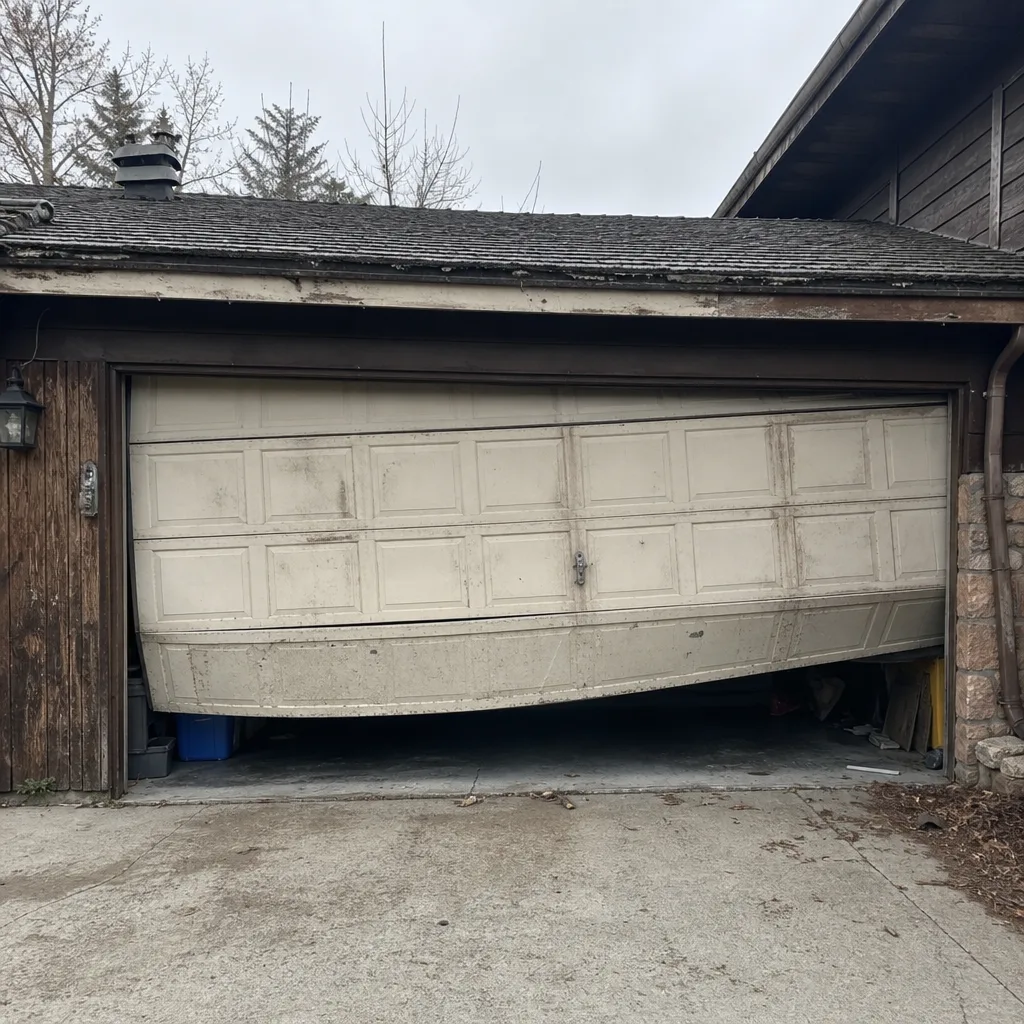 Before
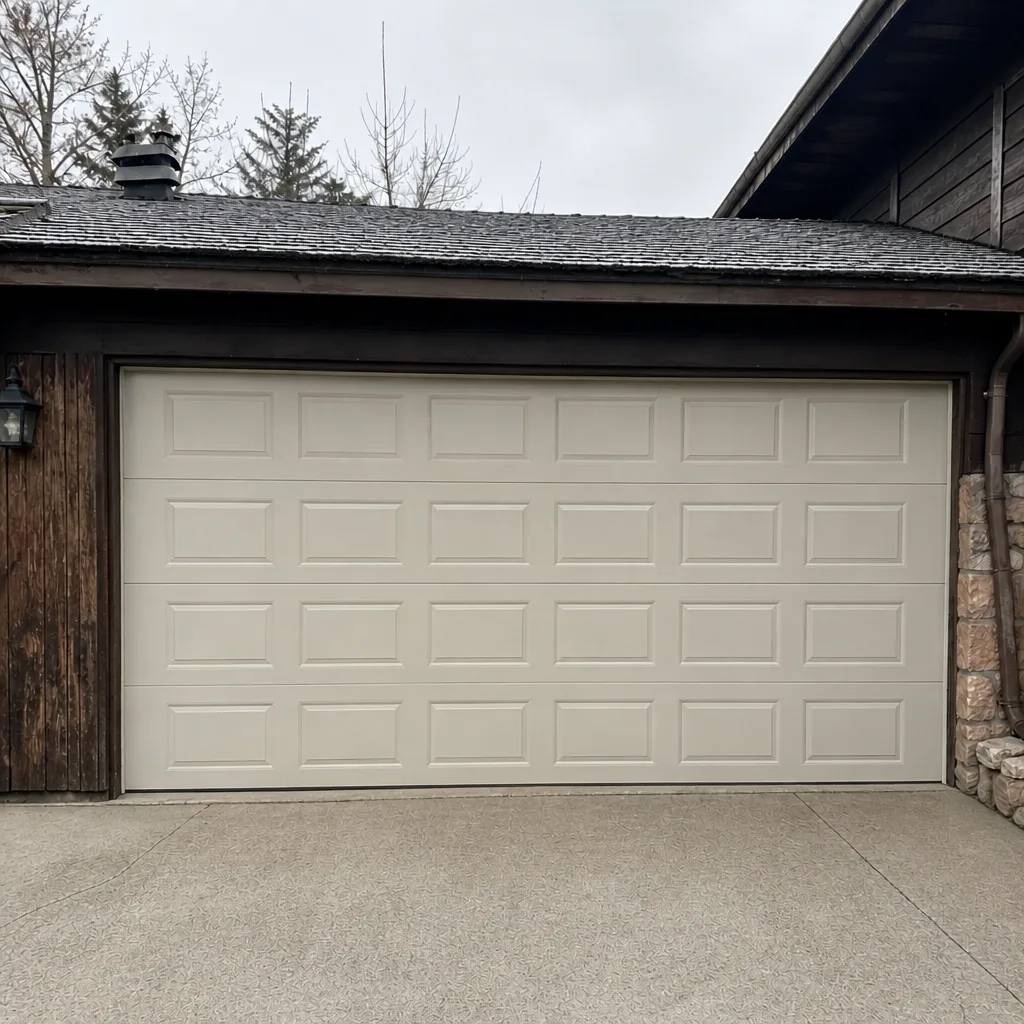 After
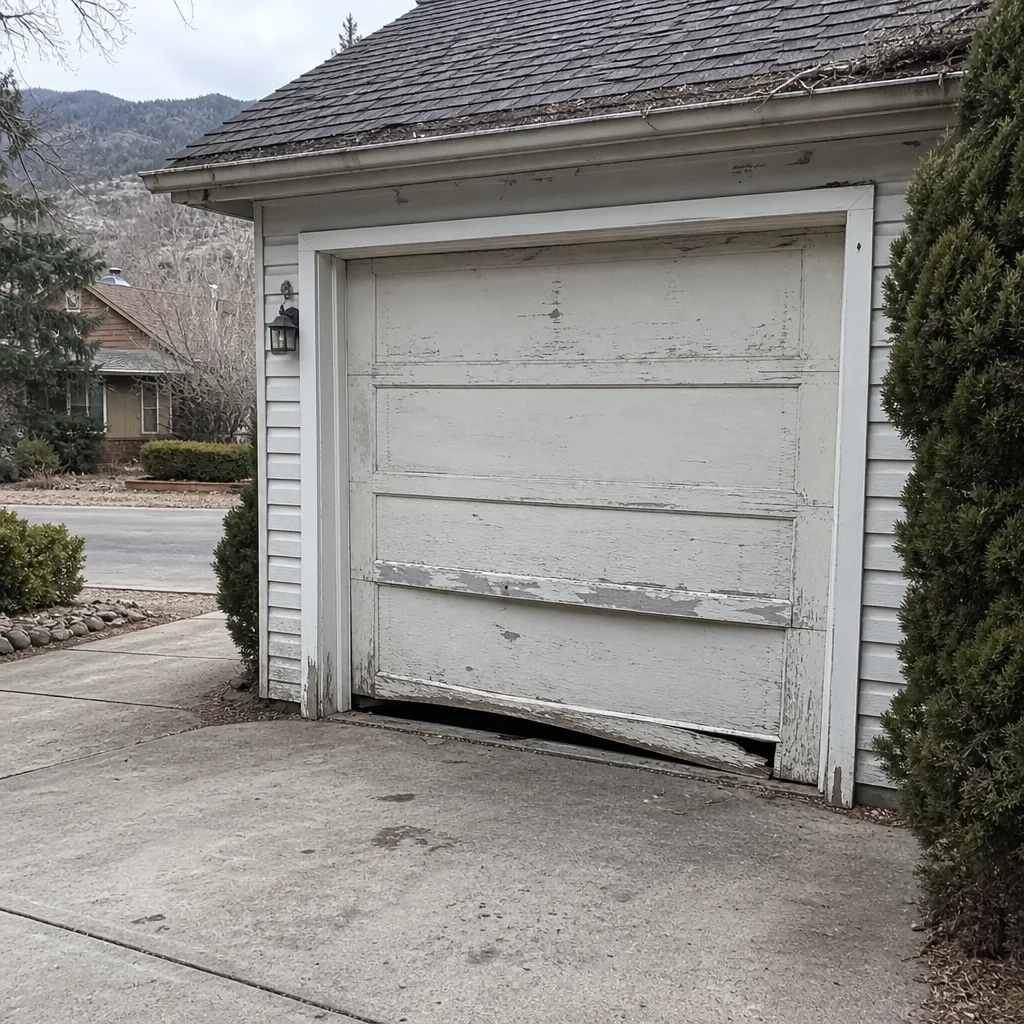 Before
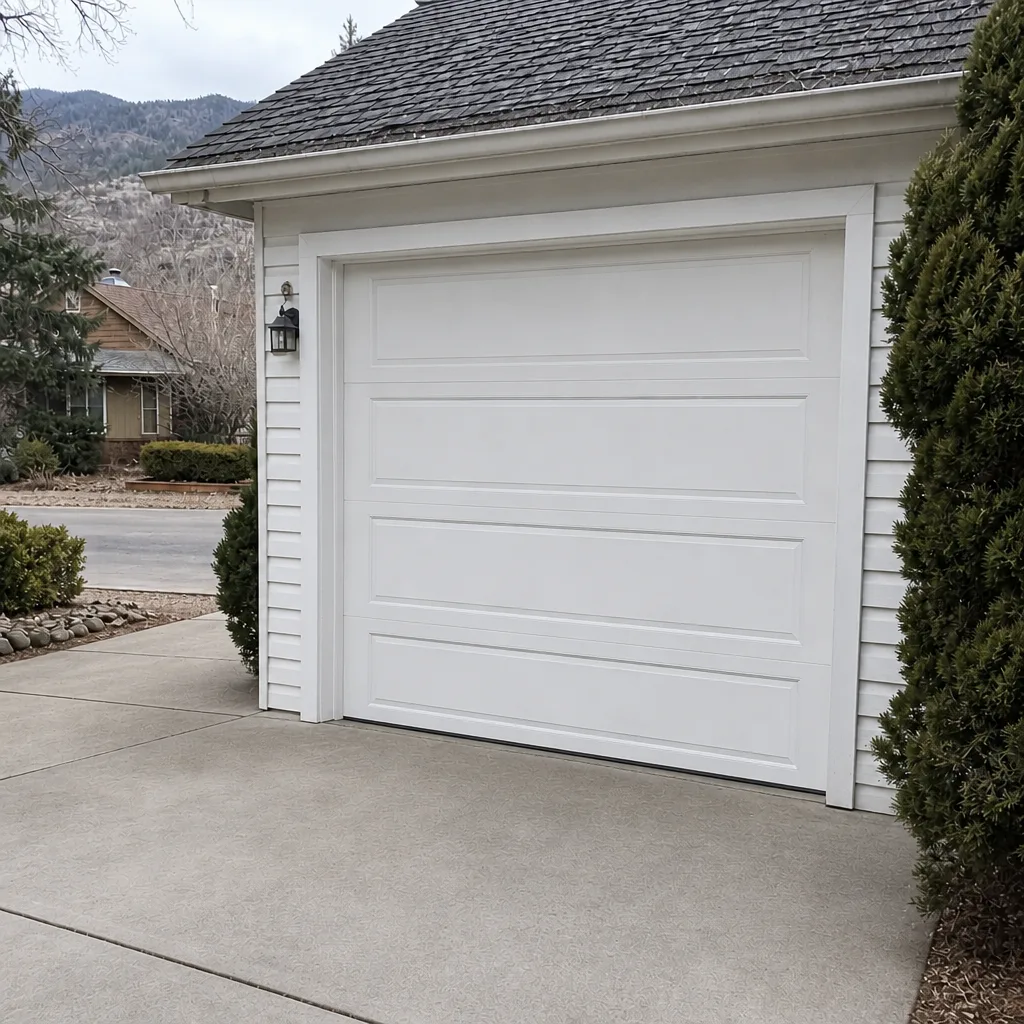 After
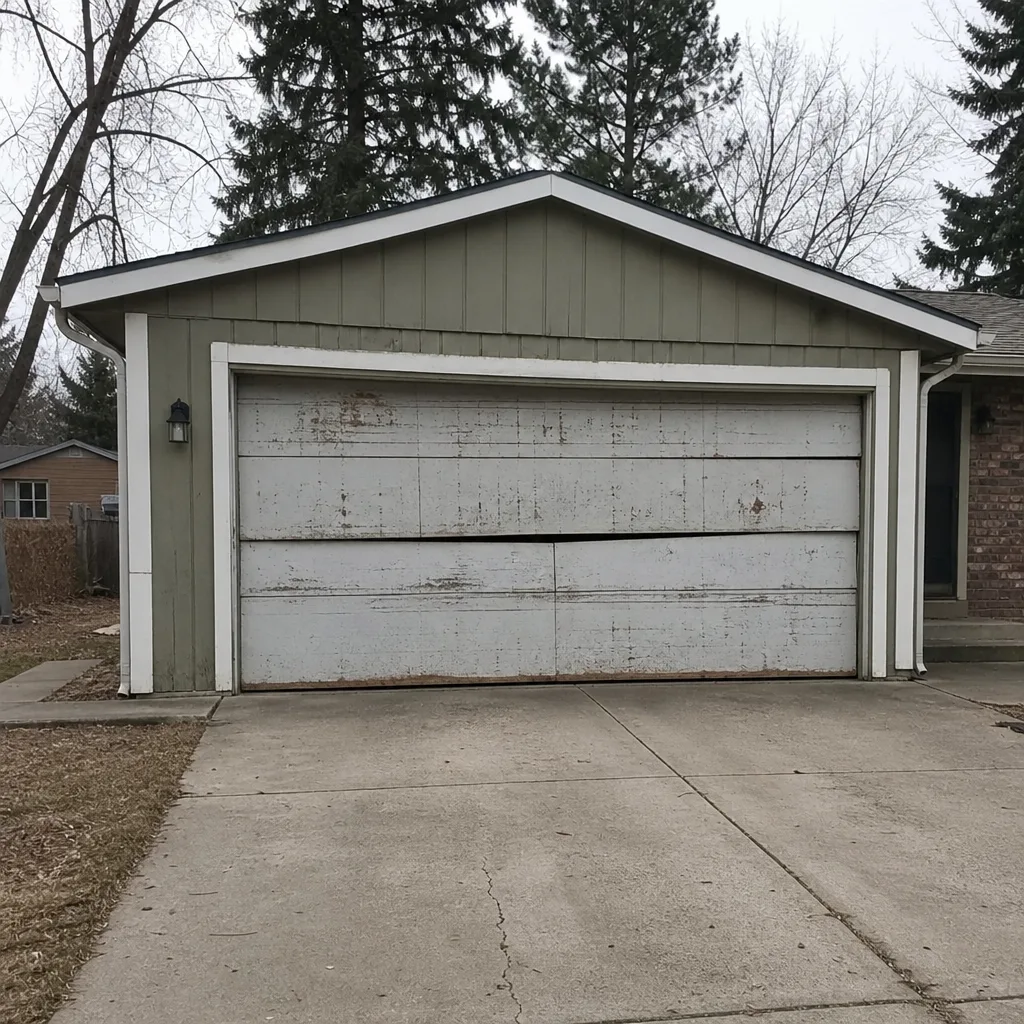 Before
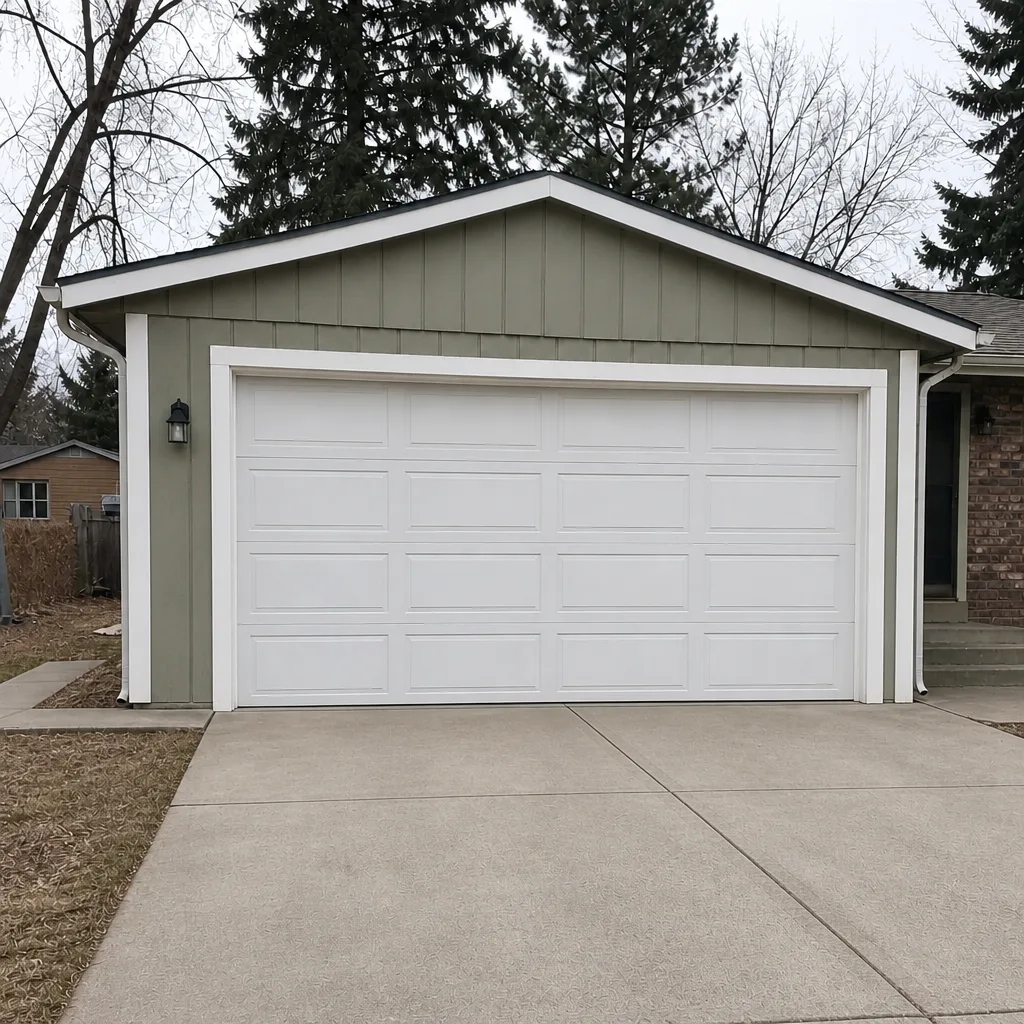 After
When to Call a Professional
Call a professional when the symptom points to springs, cables, or the door’s balance, and don’t wait to see if it gets worse. The signs that warrant a call without hesitation are a snapped or visibly failing spring, a frayed or snapped cable, a door that reverses on contact with the floor every time, a door that hangs crooked or slams down, and a door that won’t stay up on manual release. These are the cases where the risk compounds with each cycle. A slower travel speed, an opener that’s out of adjustment, or a door that reverses halfway up is also worth a call, but it can usually be scheduled rather than rushed.
The sound-based table and the urgency triage above are meant to answer most of the questions before you pick up the phone. When they don’t, we can walk through the symptom with you. Highlands Garage Door Repair Pros offers free estimates in Highlands – call (877) 492-1832. Our technicians have up to 9 years of experience, and we’re set up to work on the equipment from the eight major brands, so the right answer is usually a short conversation away.
Frequently Asked Questions
A door that reverses on contact with the floor, every cycle, is the most serious single warning sign, followed closely by a snapped spring or a frayed cable. These signs mean the door’s balance or its load-bearing components have failed, and the door should not be used until it’s been inspected. If you’re seeing any of these in Highlands, don’t cycle the door again – call (877) 492-1832 for a free estimate.
The location of the noise tells you. Popping or grinding from the top of the door near the header is usually a spring, bearing plate, or center bracket. Rattling or a strained whine from the opener unit hanging from the ceiling is usually the opener itself. Disconnect the door from the opener and cycle it by hand to isolate which system is making the sound. Call (877) 492-1832 if the location is unclear.
Not necessarily. In Highlands, stiff springs, thickened grease, and contracted steel make a healthy door slower on the first cold cycle. A door that returns to normal speed once the day warms up is showing you a service need, not a mechanical failure. A door that’s slow at every temperature is a different story – that’s usually depleted spring tension and worth a call. Either way, a free estimate will tell you which one you have.
No. Torsion springs hold enough stored energy to cause serious injury in a fraction of a second, and the correct tools for adjusting one are not household tools. Spring repair is a job for a trained technician. Our team handles garage door spring repair as a standard service, which many general handymen won’t touch. Call (877) 492-1832 for a free estimate.
Depends on the sign. A door with a squealing roller or a rattling opener can usually be scheduled for repair within the month. A door with a snapped spring, a frayed cable, or a reversing-on-contact problem should not be operated at all. The urgency triage above is a working guide, but if you’re unsure which tier your door falls into, call and describe the symptom – a quick conversation usually settles it. Call (877) 492-1832 with the details.
We work on eight of the most common residential brands: LiftMaster, Chamberlain, Genie, Clopay, Amarr, Wayne Dalton, Craftsman, and Raynor. That covers most of the doors and openers in Highlands homes. If you know your brand, mention it when you call; if you don’t, we’ll identify it when we look at the door. Call (877) 492-1832 for a free estimate.
The Bottom Line
Garage door warning signs aren’t all equal, and reading them correctly saves money and stress. A grinding noise from the header, a snapped spring, a frayed cable, or a door that reverses on contact needs the door stopped now. A slower travel speed, an out-of-adjustment opener, or a worn roller should be scheduled this week. Squealing rollers, rattling openers, and cosmetic rust can wait until it’s convenient. Cold weather in Highlands makes a healthy door behave badly, but it doesn’t cause a real mechanical failure, and a symptom that persists after the door warms up is a symptom worth calling about. When in doubt, the free-est thing you can do is ask, and the most expensive thing you can do is drive the door through a failing part.
If your door is telling you something, call Highlands Garage Door Repair Pros at (877) 492-1832 for a free estimate. We answer 24/7. Fast dispatch from 7am to 7pm, Sunday through Friday. We’re set up to work on the eight major brands, handle spring repair as a standard service, and carry the parts supply side so diagnosis doesn’t wait on an order. Our technicians have up to 9 years of experience, and we work on Highlands Garage Door Repair Pros as a single-trade specialist – garage doors, every day.
Written by the team at Highlands Garage Door Repair Pros.