
Last updated November 21, 2026
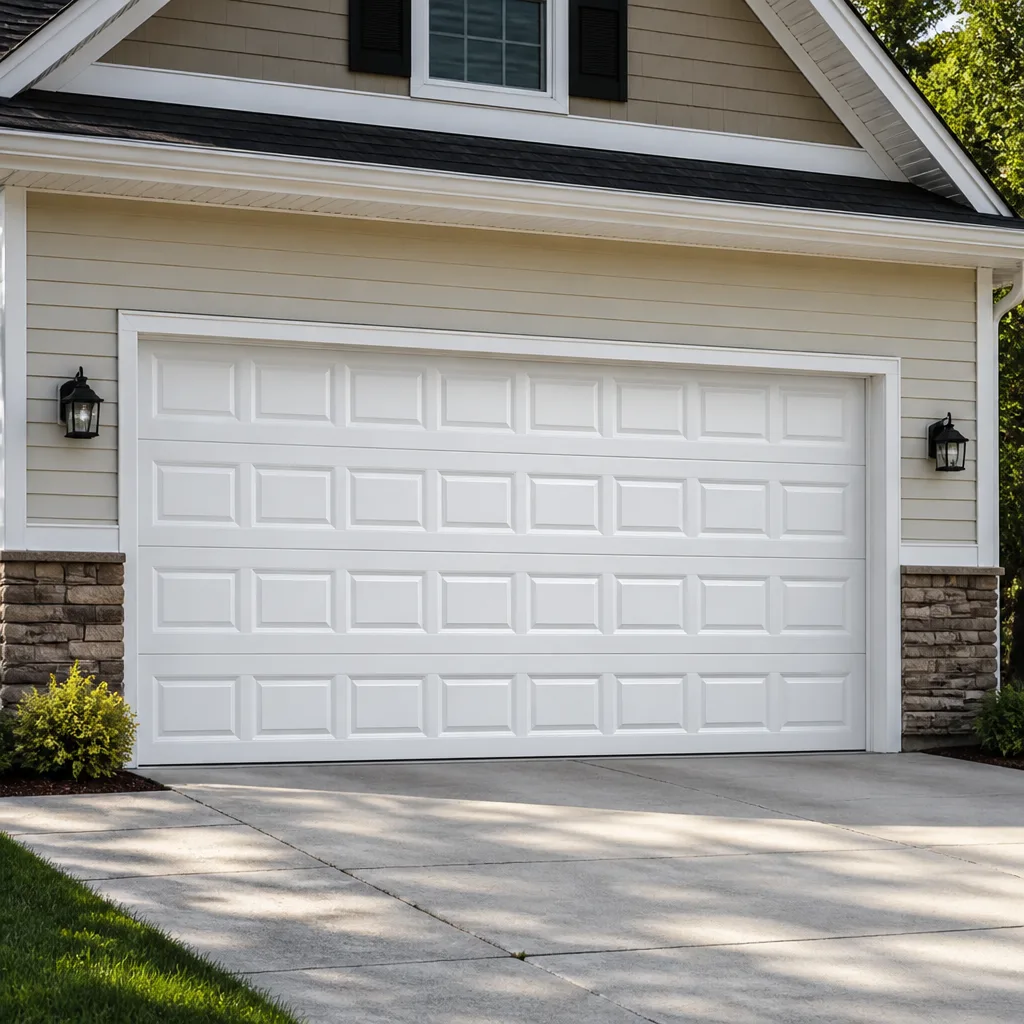 Raised-panel steel
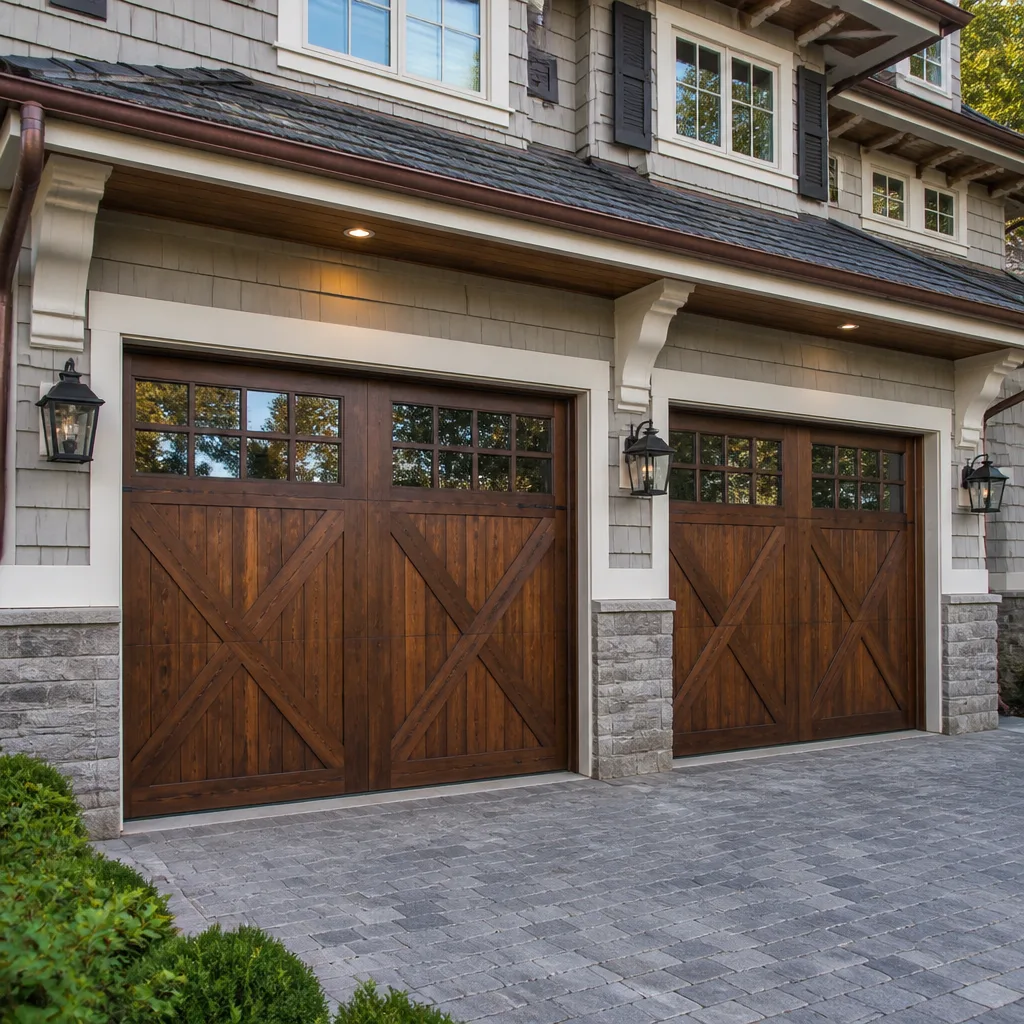 Carriage house
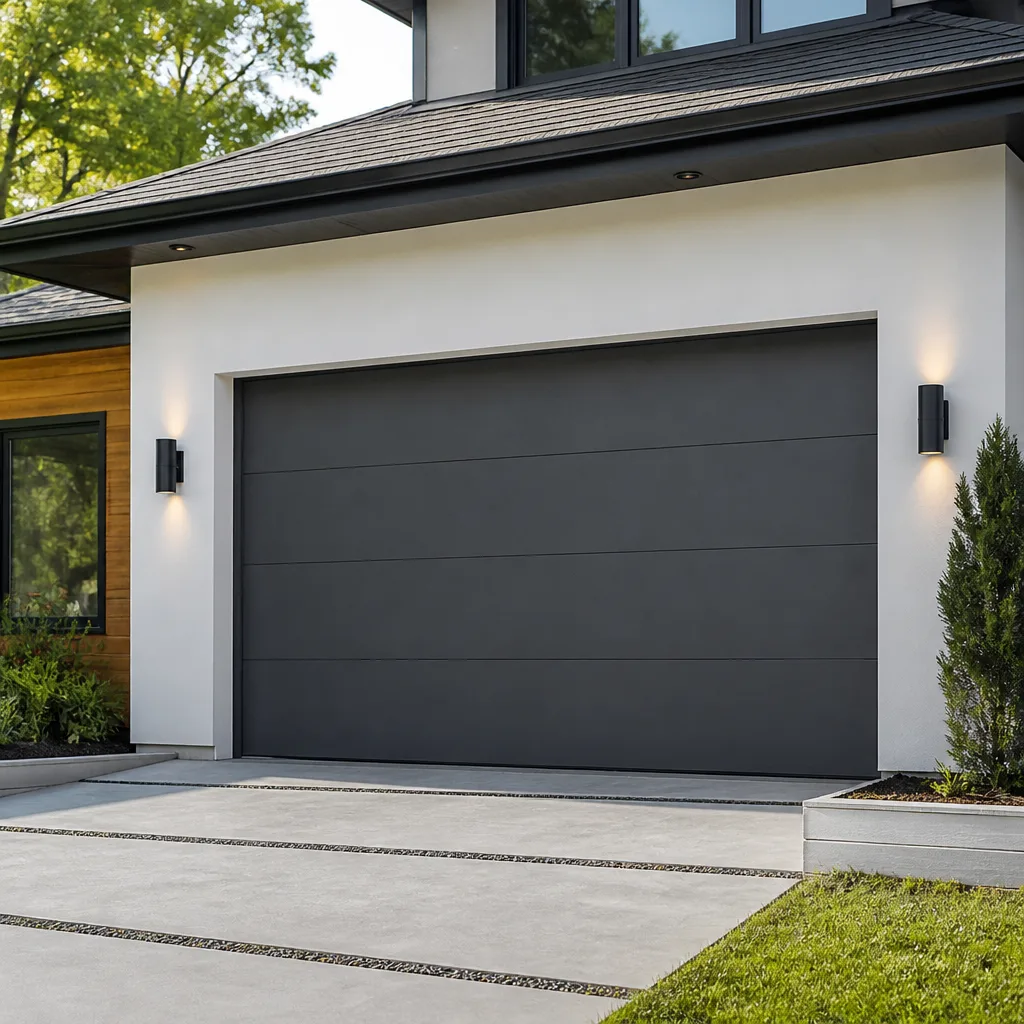 Modern flush
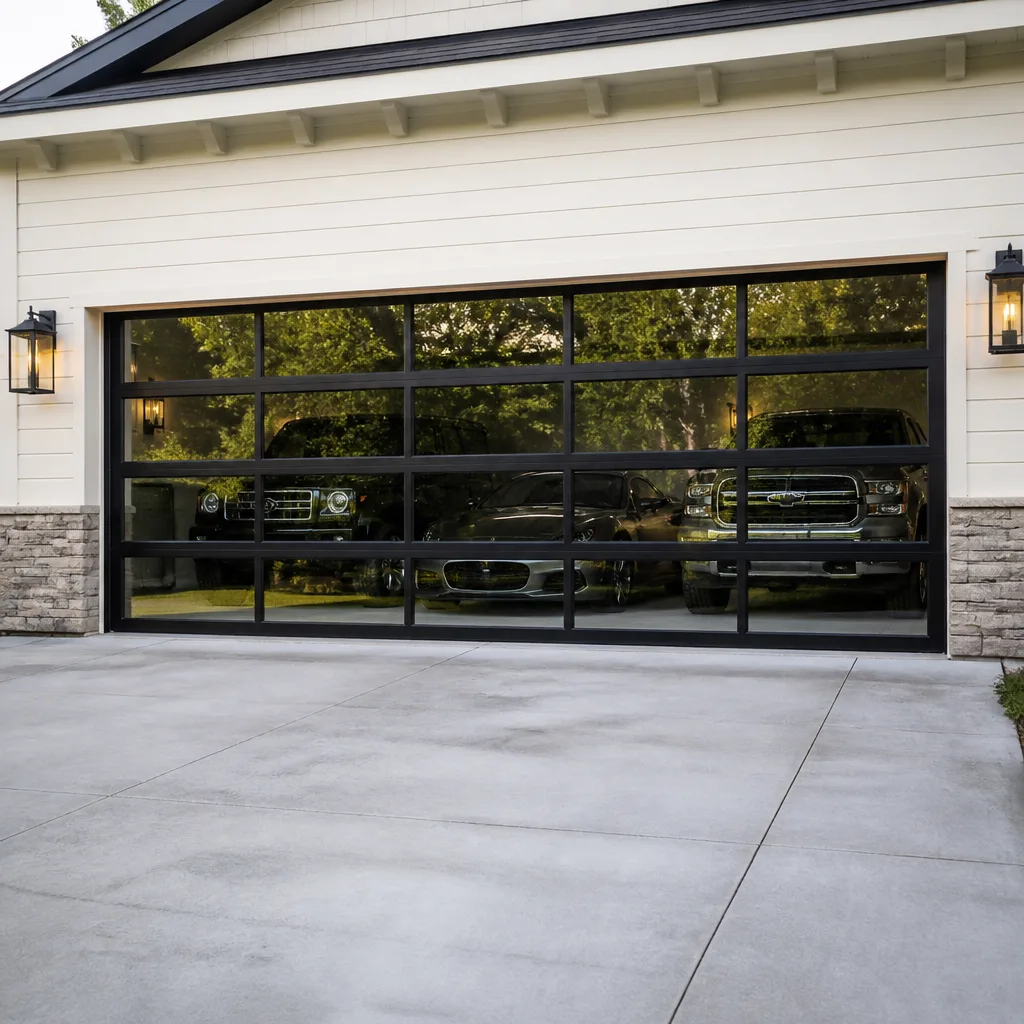 Full-view glass
 LiftMaster openers
 Chamberlain openers
Full 25-point door and opener safety check with every visit - springs, cables, rollers, tracks, and your LiftMaster or Chamberlain opener included
You get a price before we start. It does not change when the pro arrives.
Get your free estimateGarage Door Repair Troubleshooting in Highlands: Common Problems and How to Fix Them
The door that “just stopped working” overnight almost never failed overnight. In our experience, it announced itself first – a grind that showed up a few mornings running, a pop when the door came down, a scrape near the top of the opening. By the time the door quits, the part that gave out has usually been telling you about it for a week. This guide maps the symptoms Highlands homeowners describe to the components that actually cause them, separates the checks you can safely make from the two that can hurt you, and shows you when a repair is real and when it’s a callback waiting to happen.
Quick Answer
Most garage door failures in Highlands come down to six mechanical categories: springs, cables, rollers, tracks, opener logic, and balance. You can safely identify which one you’re facing by listening for the specific sound, watching how far the door travels, and testing the opener’s release – but you should not touch springs or cables, which are under high tension and cause serious injury. Anything that involves a broken coil, a frayed cable, or a door that won’t stay up on its own needs a trained technician.
Styles & brands we work with
- Raised-panel steel
- Carriage house
- Modern flush
- Full-view glass
- LiftMaster openers
- Chamberlain openers
Table of Contents
- Symptom-to-Cause: The Troubleshooting Matrix
- Motor, Spring, or Track? Telling Them Apart
- Why Highlands Elevation and Temperature Swings Age Doors Differently
- What You Can Safely Check (and What You Can’t)
- Why a Door That Opens Once Then Stops Will Come Back
- Brand-Specific Quirks: LiftMaster, Genie, Clopay, Amarr
- When Troubleshooting Turns Into Replacement
Symptom-to-Cause: The Troubleshooting Matrix
The most useful troubleshooting tool isn’t a meter or a wrench – it’s your ear. Each failure mode in a garage door produces a fairly distinct sound, and matching the sound to the component narrows the problem faster than any diagnostic checklist. Here’s how the profiles break down in our experience across Highlands homes.
Grinding, constant, gets louder as the door rises: Usually rollers or the torsion shaft bearings. Worn steel rollers on an older Clopay or Wayne Dalton door grind against the track. Sealed bearings in the end plates dry out and add a low rumble. Lubrication quiets it temporarily; replacement of the worn parts is the actual fix.
Loud pop, then the door drops or won’t lift: A torsion spring broke. The pop is the coil splitting. The door becomes extremely heavy – often too heavy to lift by hand – and the opener will run but the door won’t move. This is the most common failure we see, and it’s the one homeowners should not attempt themselves.
Scraping metal near the top corners: The door is out of square against the track. A bent or shifted vertical track makes the top panel scrape on one side as it passes. Left alone, the door will bind, the opener will strain, and the panel edge will wear through its paint.
Silence, no motor sound at all: Opener electrical issue – dead capacitor, failed logic board, tripped breaker, or a safety sensor blocking the start. If the opener light doesn’t come on either, start with the breaker and outlet before assuming the motor.
Motor hums but nothing moves: Either a broken spring (opener trying to lift a door it can’t handle), a stripped gear inside the opener, or a disconnected trolley. This is where the balance test below tells you which.
Rattle or slap on the down travel: Loose hinges, a worn bottom bracket, or a door panel bolt that’s backed out. Tighten and inspect; the noise is a warning before the failure.
Intermittent stops mid-travel: Safety sensor misalignment, a logic fault, or a limit switch out of adjustment. If the door reverses for no visible reason, look at the sensor eyes first.
Motor, Spring, or Track? Telling Them Apart
When a door “just won’t move,” homeowners often assume the motor is dead. In our experience, the motor is the least frequent culprit. Here’s the sequence we recommend for isolating the real problem without touching anything under tension.
- Pull the release cord. That’s the red-handled cord hanging from the opener trolley. It disconnects the door from the opener and lets you move the door by hand.
- Try lifting the door manually. A properly balanced door can be lifted with one hand and stays up when you let go at the halfway point. If it’s extremely heavy, the springs are the issue. If it drops back down, the springs are the issue. If it won’t move at all, the track is binding or the door is jammed.
- If the door moves smoothly by hand, the springs and track are healthy – the problem is in the opener or its wiring.
- If the door binds only on one side, the track is out of alignment on that side.
Notice what that test never asks you to do: touch the spring, the cable, or the torsion bar. Those components hold enough stored energy to break bones – a professional always treats them as live machinery, and so should you. The balance test tells you the answer without putting your hands anywhere near it.
If the balance test points to the opener, our garage door opener repair team can diagnose it. If the test points to the springs, the same service call covers that too – and we carry spring stock so the door usually goes back up the same day.
Why Highlands Elevation and Temperature Swings Age Doors Differently
Highlands sits high – the town’s elevation is above most of the Front Range – and that matters for how garage doors wear. Three forces combine here that don’t combine the same way at lower-altitude homes.
Wider daily temperature swings. Highlands days can run warm and the nights drop sharply. Every swing expands and contracts the torsion spring, the cables, and the metal door panels slightly. Over thousands of cycles, that thermal cycling adds up – springs fatigue faster than they would in a steadier climate, and cables that are slightly out of tension will stretch.
Higher UV exposure up at elevation. The sun is stronger here, and the rubber bottom seal and any plastic parts on the opener are hit by UV that breaks them down faster than the manufacturer’s rating assumes. Seals dry and crack; plastic sensor housings go brittle.
Drier air and seasonal dust. Low humidity pulls moisture out of the wood framing around the opening and dry-lubes the steel rollers. A roller that was quiet in spring will grind by late summer when the lubrication has dried out.
The practical result in our experience across Highlands: springs are the first thing to fail, usually within the timeline the manufacturer warns about – and often sooner. Cables stretch and need retensioning. Bottom seals go first among the rubber components. If you’re on a maintenance schedule, or you just want to know when the next failure is likely, our team can look at the door’s cycle count and the age of the springs and tell you the window.
What You Can Safely Check (and What You Can’t)
Troubleshooting a garage door has a narrow safe zone. Inside it, you can usually identify the problem and sometimes solve it. Outside it, the two most dangerous components in the trade live. Here’s the split.
The Three Genuinely Safe Steps
- Check the safety sensors. The two small lenses near the floor at each side of the opening should have a steady light (usually green or amber). If one blinks or is dark, wipe the lens, check that they’re lined up, and confirm nothing is blocking the beam. Misaligned sensors are the single most common cause of a door that won’t close – and the fix is often a nudge.
- Check the wall button and the opener’s circuit. Press the wall control. Does the opener light come on? If not, check the breaker panel and the outlet the opener is plugged into. A door that goes silent after a power outage is often just an opener that needs the safety reverse re-engaged by cycling the wall button once.
- Look at the door – don’t touch the mechanism. From the floor, look at the rollers in their tracks. Any roller that’s visibly chewed, cracked, or missing its wheel should be replaced. Any track that’s visibly bent, dented, or separated from its bracket needs a professional look. Visual inspection is safe; hand work on the tracks and rollers at height is not.
The Two Steps You Must Not Take
- Do not wind, unwind, or touch the torsion spring or its winding bars. The springs on a residential door store enough force to break bones or cause fatal injury if they release while you’re hands-on. This isn’t fear-mongering – it’s why many general handymen decline spring work entirely. Let a trained technician handle it.
- Do not adjust the tracks or the cables yourself. A track that comes loose under load can drop the door, and a cable that releases under tension whips. Both are covered by most residential warranties against DIY adjustment – so the “fix” can void the warranty you’ll need when the real failure happens.
The short version: sensors, wall button, breaker, and visual inspection are yours. Springs, cables, track adjustment, and any work standing above the door are not. When you’re ready to have the real problem identified and fixed, our garage door repair team handles the safe-and-not-so-safe parts as standard work.
Why a Door That Opens Once Then Stops Will Come Back
“It worked once this morning and now it won’t” is the symptom that fools the most homeowners into thinking the problem solved itself. It didn’t. A door that opens correctly once and then refuses to move the second time is almost always showing a secondary failure – a problem downstream of the one you noticed.
- A broken spring plus a tired opener. If one spring of a matched pair has failed, the surviving spring can lift the door once, slowly, from a fresh start – and then the opener’s overload protection trips. The door “works once” because the opener has enough remaining torque for one lift. The second attempt trips it. Replacing only the broken spring and leaving the survivor in place risks the survivor failing weeks later – which is why matched pairs are almost always replaced together.
- An opener nearing the end of its motor life. Failing capacitors and a hot motor will let one cycle through, then cut out on thermal protection. It runs cool on the first lift, overheats on the second, and shuts down. After a rest, it works again – until it doesn’t.
- An intermittent safety sensor. Sun glare across the lens mid-travel, or a connection that fades when the door’s vibration rattles a wire, can produce one clean cycle and one aborted one.
- A partially bound track. The door straightens itself and runs once cleanly, then sticks on the second pass once the door has settled into the bind.
In our experience, “it opened once” doors almost always come back within a few days – not because the repair was wrong, but because the repair only addressed the visible symptom. When we diagnose a door in Highlands, we test the balance and the opener separately so the actual secondary failure gets caught on the first visit. That’s the difference between a fix and a callback.
Brand-Specific Quirks: LiftMaster, Genie, Clopay, Amarr
Multi-brand fluency isn’t a slogan about how many logos we know. Different systems fail in different ways, and knowing the brand style matters when troubleshooting. We service eight common residential brands: LiftMaster, Chamberlain, Genie, Clopay, Amarr, Wayne Dalton, Craftsman, and Raynor. Here’s how the most common ones show their problems.
Chamberlain and LiftMaster. These share a manufacturing family, and their openers are the most common we see. Their smart-home-capable models (the ones that link to your phone) also produce the most “it works from the wall button but not the app” calls. That’s almost always a Wi-Fi module pairing issue, not a mechanical failure. Their safety sensors are also the ones most often knocked out of alignment – a roughly 30-second re-aim usually fixes it.
Genie. Older Genie units use a different limit-switch design than the Chamberlain family, and a “door stops partway” complaint on a Genie frequently traces to that limit switch rather than the motor. Genie’s quiet belt-drive models are popular in Highlands homes because the quieter operation suits attached garages – and when those belts wear, they tend to produce a soft “clunk” that’s easy to miss.
Clopay and Amarr. These are door manufacturers rather than opener makers, and their doors age in distinctive ways. Clopay steel doors are prone to hinge bolt loosening after years of thermal cycling at higher elevation, and their bottom seals crack earlier in strong UV. Amarr doors often show track-alignment issues first because of how their rollers seat, and their panel construction means a bent track shows up as a scrape on the panel edge before it shows up as a bind.
The reason brand knowledge matters: a technician who has worked across these systems knows which fault is typical for the brand and which one is a misdiagnosis. That’s the difference between fixing the door and chasing the wrong part. Our team is comfortable with all eight brands, so repairs don’t wait on a phone call to a manufacturer.
When Troubleshooting Turns Into Replacement
Most of what we fix in Highlands doesn’t need a new door. But some doors reach a point where repair starts to cost more than the door is worth – and part of good troubleshooting is identifying when you’ve crossed that line.
Repair Is Usually the Right Call When
- The door itself is structurally sound – no rot, no cracked panels, no dented sections that affect travel.
- The problem is limited to springs, rollers, cables, hinges, the opener, or the hardware – all of which are replaceable without taking down the door.
- The door still has usable life left and the replacement cost of a new door would run well past the repair.
Replacement Usually Makes More Sense When
- The door panels are failing in multiple places – rust-through, cracks, or rot around the bottom.
- The opener has reached the end of its useful life and the door is already aging – replacing both together avoids a second visit and second bill.
- The door’s design or insulation is no longer meeting how the home is being used.
Full installation capability matters here. When a repair company determines a door isn’t worth repairing, a homeowner who only has a repair company on the line now has to find an installer. We handle repair, parts, and garage door installation under the same roof, so an unrepairable door doesn’t create a handoff. If it isn’t worth repairing, we’ll tell you – and the same company that delivered the verdict can quote the replacement.
Why Elevation and Temperature Swings Stress Springs and Cables
This is the part of troubleshooting that has less to do with what’s broken and more to do with why it broke. Highlands elevation changes the physics of the spring assembly in two ways worth understanding.
Higher altitude means lower air pressure, which changes how much the springs work to do their job, but the bigger effect is the temperature swing. Torsion springs are engineered for a specific number of cycles within a specific temperature band. Realign the temperature 30 degrees a day, season after season, and the metal fatigues faster than the cycle rating assumes. That’s why spring failure rates in Highlands tend to run ahead of what the manufacturer card on the door suggests.
Drier air accelerates wear on cables and seals. The low humidity pulls lubrication out of cable pulleys and steel rollers. A cable that would stay greased for years at lower elevation will tend to stretch and fray sooner here. The bottom seal dries and cracks, and that crack lets moisture in around the door bottom – which then rusts the bottom panel.
The upshot: if you’re on a maintenance schedule, the parts that fail first in Highlands are the springs (first), then cables and seals (second), then rollers (third). If you’re not on a schedule, the springs will still tell you by sound before they fail – which is exactly the reason ear-based troubleshooting matters here. The parts announce themselves.
See the difference
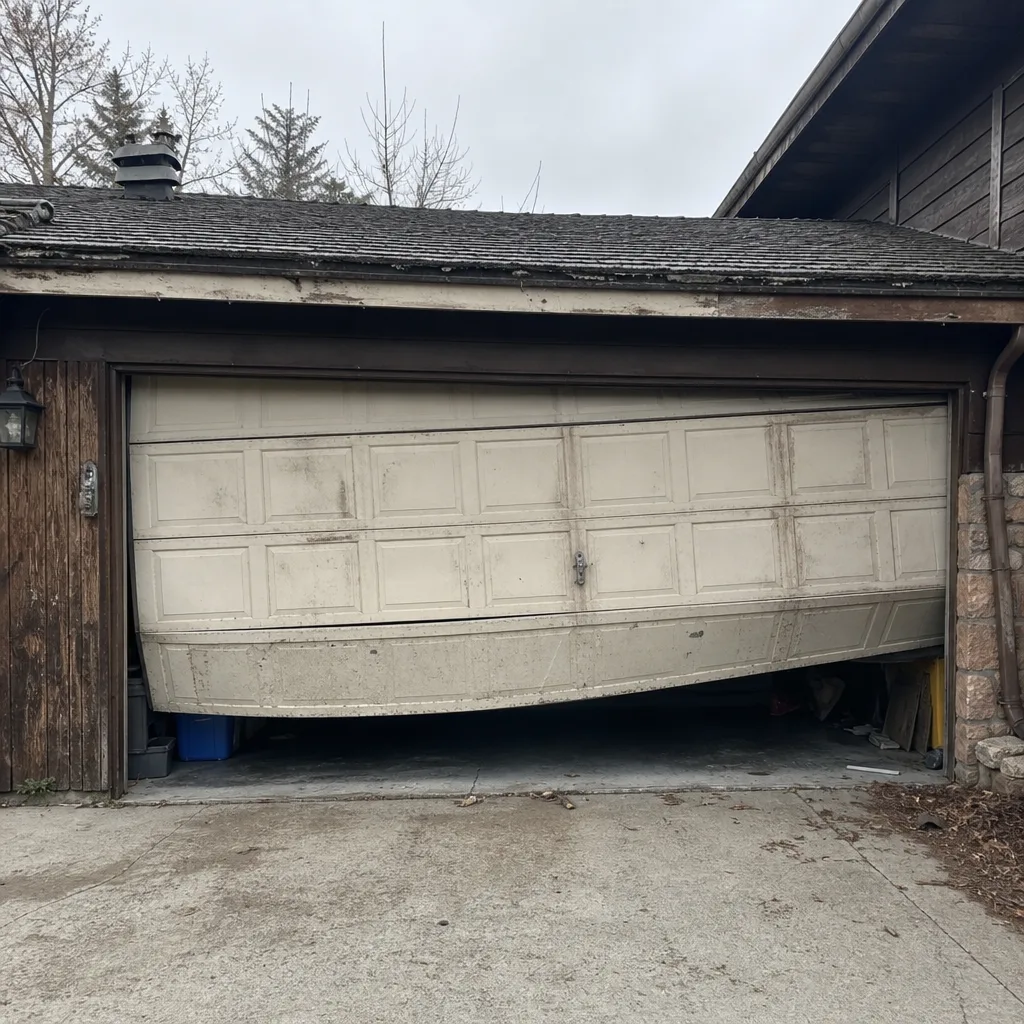 Before
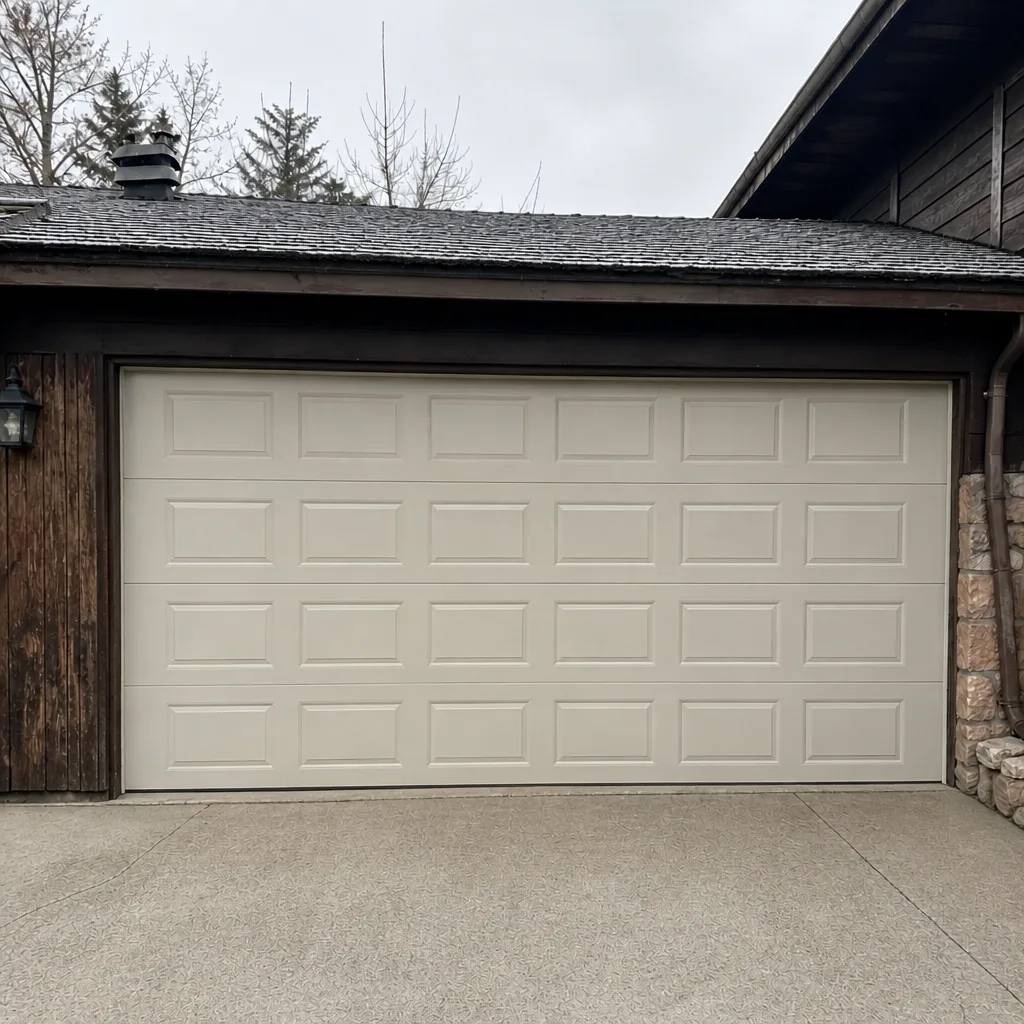 After
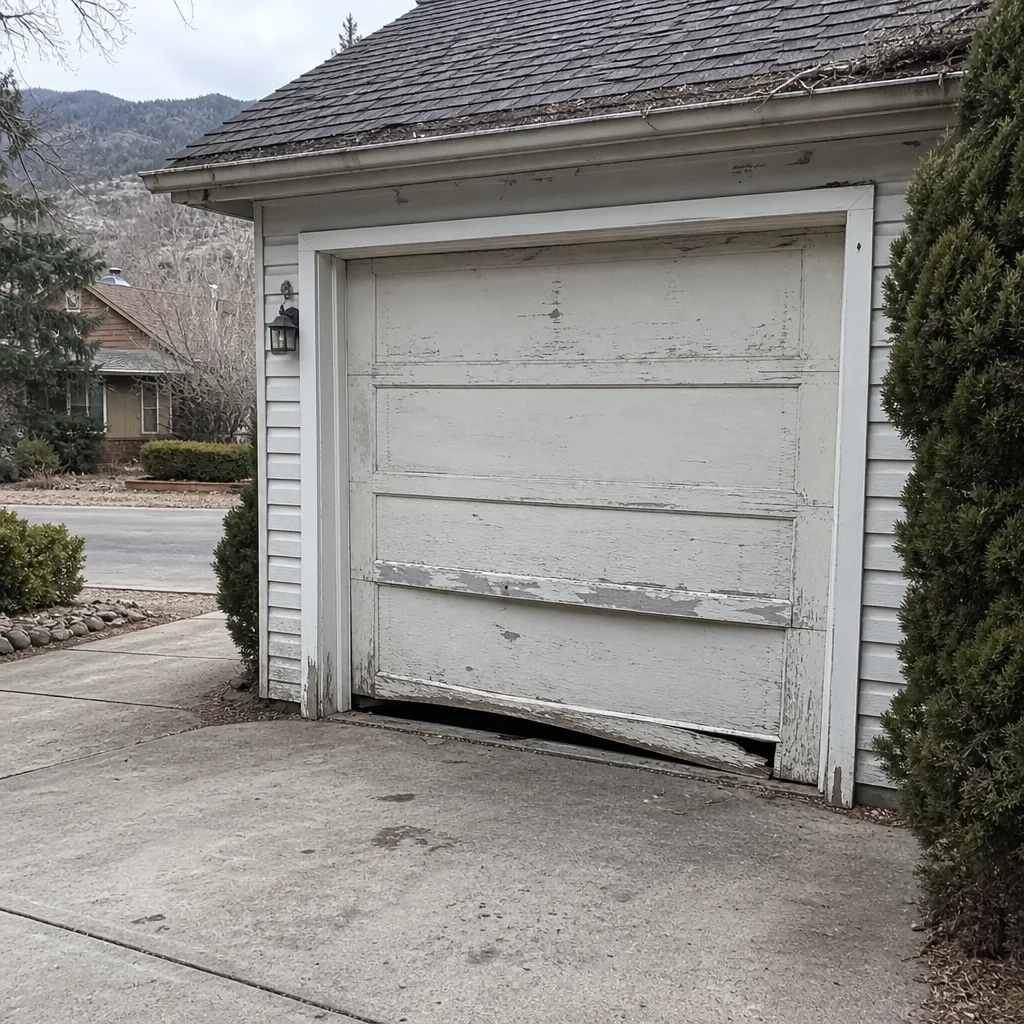 Before
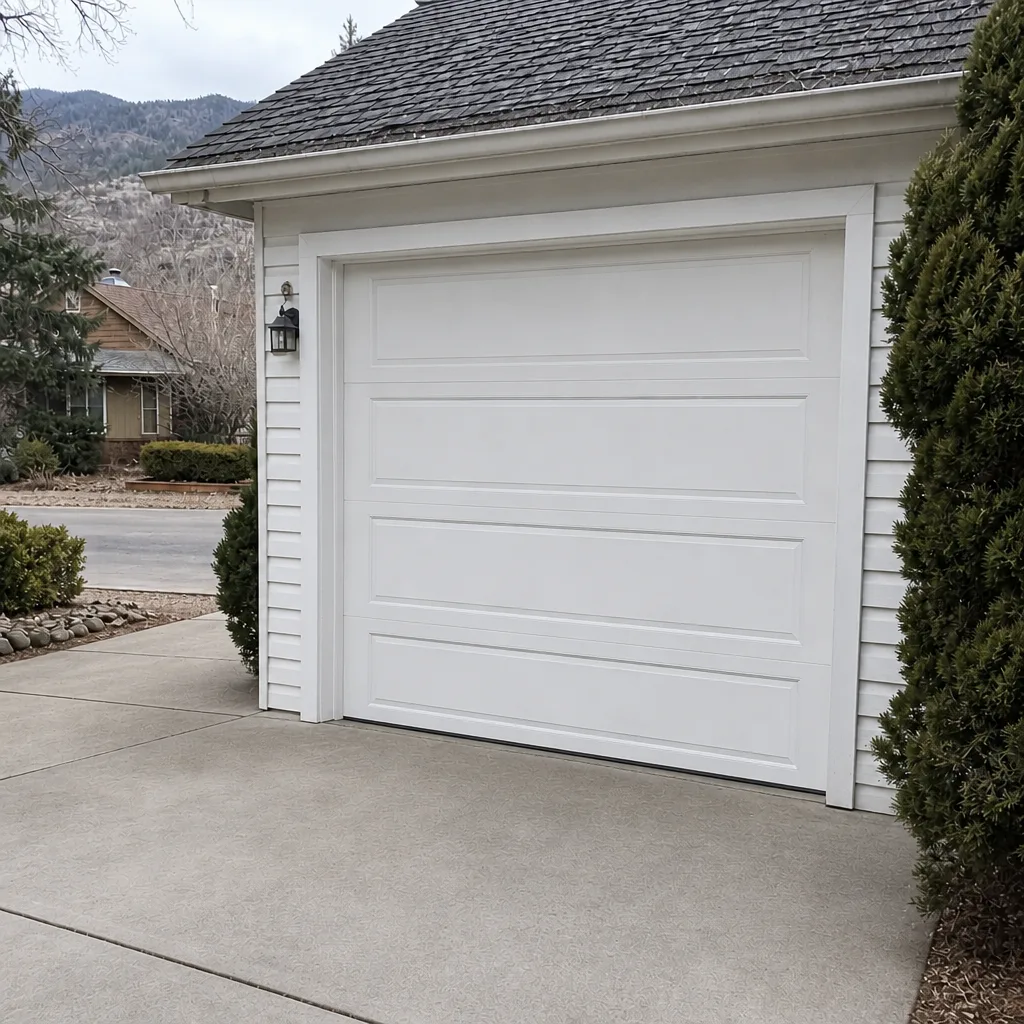 After
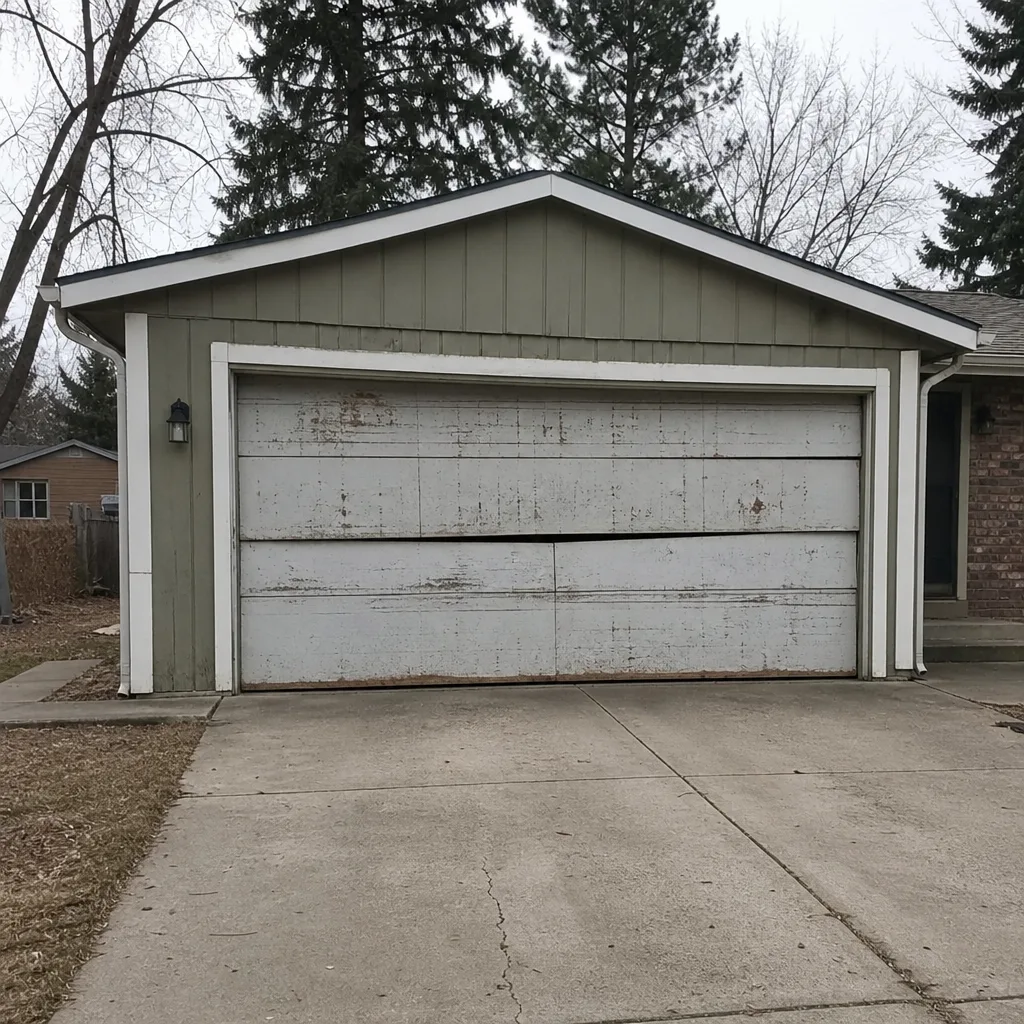 Before
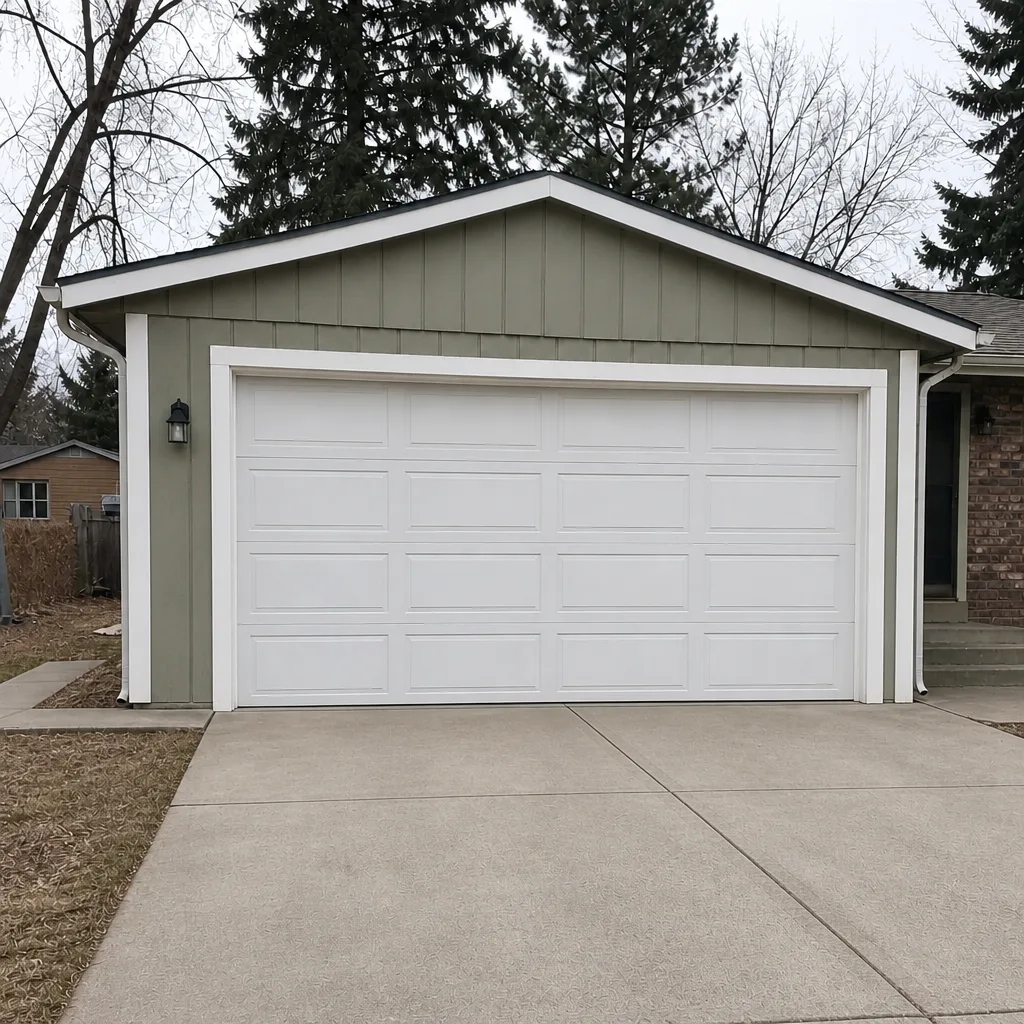 After
Common Mistakes to Avoid
- Lubricating the tracks. Tracks are meant to be dry. Lubricant attracts dust and grit from Highlands’ dry, windy air, which turns into a grinding paste. Lubricate the springs, rollers, and hinges – not the tracks.
- Calling a general handyman for a spring. Many decline the work, and the ones who don’t may not have the specialist tools. Spring repair is core work for a garage door specialist, not a sideline for a handyman.
- Replacing one spring of a matched pair. It’s cheaper for one visit. The survivor fails within a short window and the door comes down again, so you’ll pay for two visits instead of one. Replace pairs together.
- Letting the opener do the lifting when the springs are weak. A tired spring plus a determined opener means the opener burns itself out doing work it was never designed to carry. Spring problems that go unattended become opener problems too.
- Ignoring a single sensor blink. A sensor that blinks now and again before closing is warning you of a misalignment or a connection that’s about to fail. Left alone, the door stops closing entirely – often on a day you need the car out.
- Trying to straighten a bent track by hand. A track that’s already under tension will bend back into a different bad shape, and the door’s alignment gets worse. Track adjustment needs a technician and a level.
- Skipping the balance test and forcing the door. Pulling the release cord and checking the door’s weight is the single most useful diagnostic, and it costs nothing. Without it, every repair call is guesswork.
When to Call a Professional
Call a trained technician when any of these match your situation: a spring has visibly split or the door has become dramatically heavy; a cable is frayed or has slipped off its drum; the door balances at an angle or won’t stay open; the opener hums but doesn’t move the door; the door reverses for no reason; you’ve replaced the battery in the remote and the door still won’t respond; or a track is bent, separated, or the door scrapes going up. If you’re not sure which category fits, that’s also a call – a trained eye sorts it out in minutes, and a free estimate costs less than guessing wrong.
Highlands Garage Door Repair Pros offers free estimates in Highlands – call (877) 492-1832. We answer 24/7. Fast dispatch from 7am to 7pm, Sunday through Friday. Our technicians have up to 9 years of experience and have seen every failure mode on this page more than once.
Frequently Asked Questions
The cost depends on the failure: spring replacements, opener repairs, cable and roller replacements, and track adjustments are each priced per job by a written estimate. We confirm the price before any work starts, so the number you agree to is the number you pay. Call (877) 492-1832 for a free estimate – there’s no charge for the assessment.
In most cases, yes – garage door repair is a same-day service whenever parts are on hand, since many failures (springs, sensors, opener components) use stock components kept ready for this kind of work. We answer 24/7. Fast dispatch from 7am to 7pm, Sunday through Friday. Call (877) 492-1832 to get on the schedule.
The written estimate is the price. If we discover the problem is bigger than the initial description (for example, a spring failure that has also damaged the cable or the opener), we’ll tell you before we do the additional work – and the estimate will be updated in writing. No surprise invoices. Call (877) 492-1832 for a free estimate and a clear explanation of what work is needed.
No. Torsion springs on a residential door store enough energy to cause serious injury or worse if released under tension, and the tools and technique required are specialist work. This is why many general handymen decline spring repair altogether. We recommend a trained technician for any spring or cable work. Call (877) 492-1832 and we’ll schedule the spring repair safely.
It usually means a secondary failure beneath the symptom: a matched spring pair where one has failed, a tired opener going into thermal protection, or an intermittent safety sensor. The door works once because the system has just enough capacity for one cycle. It will fail again within days. Call (877) 492-1832 and we’ll diagnose both the visible and secondary failure in one visit.
We work on eight common residential garage door and opener brands: LiftMaster, Chamberlain, Genie, Clopay, Amarr, Wayne Dalton, Craftsman, and Raynor. If the door or opener is one of those brands, we’re set up for the parts and the diagnosis; if you’re not sure which brand you have, we can identify it on the visit. To get started, visit Highlands Garage Door Repair Pros or call (877) 492-1832.
The Bottom Line
Garage door problems aren’t the mystery they look like from the outside. Match the symptom to the component – the sound on the final days usually tells you – and the failure falls into one of six categories: springs, cables, rollers, tracks, opener logic, or balance. Three checks (sensors, wall button and breaker, visual inspection) are safe to do yourself. Two (springs and cables) never are. When a “fixed” door works once and stops, treat it as a secondary failure that will return – and get it diagnosed properly the first time. In Highlands, the elevation and temperature swings push springs and cables to fail sooner than lower-altitude homes, which makes the symptoms worth reading early. Call (877) 492-1832 for a free estimate. We answer 24/7. Fast dispatch from 7am to 7pm, Sunday through Friday.
Written by the team at Highlands Garage Door Repair Pros.